
Welcome to your Gyotaku Fish Printing Kit!
Follow these simple steps to create a beautiful, traditional Japanese fish print. Whether you’re a beginner or an ink-splattered veteran, this guide will have you printing like a fish-whispering master in no time.
What’s Included in Your Kit
- Washi Paper
- Sumi Ink
- Styrofoam Blocks
- Large Brush & Detail Brush
- Blotting Sponge
- Rags
- Pins
- Fish (Not Included)
Prep Tips:
Work on a clean, flat surface. Cover your area with newspaper or anything sacrificial. Ink is committed and not afraid of your countertops.
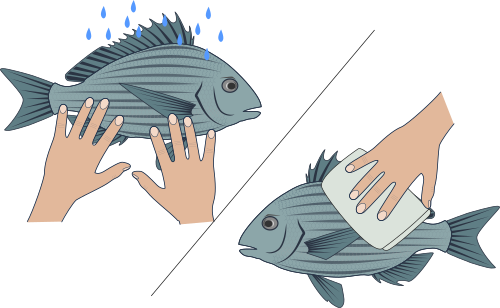
Clean and Dry Fish
Gently wash your fish with water and a drop of dish soap (or a splash of lemon juice) to remove slime.
Rinse thoroughly, then pat completely dry with the rag — including the fins and gills.
A dry fish prints beautifully. A wet or slimy fish produces blotchy, sad prints that lead to frustration, regret, and light dishonor upon your household.
Take your time here — drying the fish well truly makes the biggest difference.
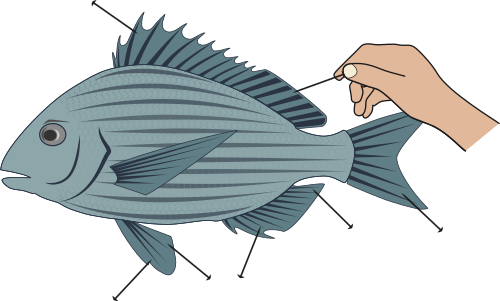
Pin the Fins
Gently wash your fish with water and a drop of dish soap (or a splash of lemon juice) to remove slime.
Rinse thoroughly, then pat completely dry with the rag — including the fins and gills.
A dry fish prints beautifully. A wet or slimy fish produces blotchy, sad prints that lead to frustration, regret, and light dishonor upon your household.
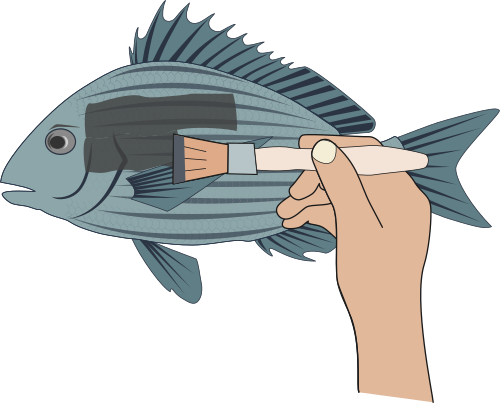
Ink the Fish
Pour a small amount of ink into the dish and add a few drops of water to thin it if needed. (It can help the ink glide smoothly without clumping.)
Using the large brush, apply a thin, even layer of ink across the fish, brushing in the direction of the scales (head → tail).
Skip the eye for now — we’ll bring that to life later.
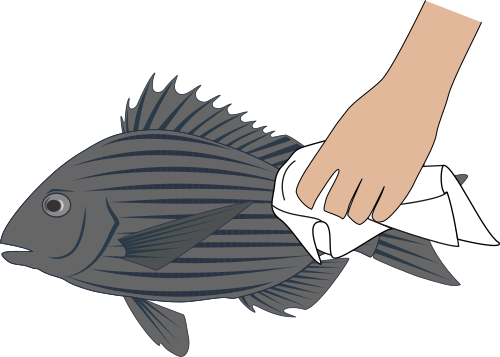
Remove Excess Ink
Wrap the blotting sponge in a paper towel and lightly dab the fish to remove excess ink and smooth brush strokes. For smaller fish, the blotting sponge is usually not needed.
Don’t wipe — dab. Wiping removes ink; dabbing removes only the extra.
A well-blotted fish gives you a crisp, detailed print instead of an ink blob.
Print the Fish
Cut your rice paper to the size you need.
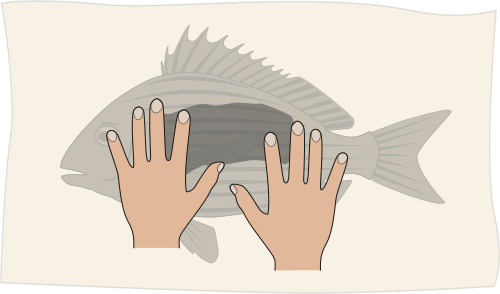
Lay it gently over the fish, starting at the center and smoothing outward. This prevents air bubbles and crinkles.
Using your fingertips, lightly rub from the center outward to transfer the ink. Work around the pins carefully, or remove them as you go — whatever feels more natural.
Keep the paper still. Even a tiny shift can create a blurry image, and suddenly your fish has two tails.
Gentle, steady pressure is all you need for stunning detail.
Remove the Print
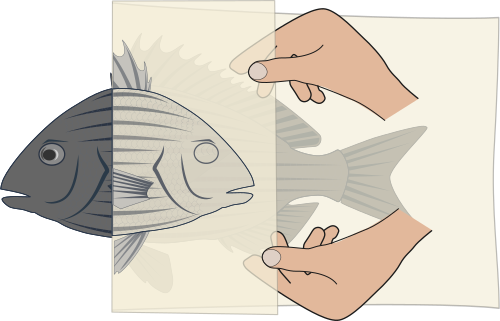
Grab two corners of the rice paper near the head of the fish and slowly lift from head to tail, keeping the paper taut as you pull it away.
Move steadily and deliberately to preserve all those tiny details.
Place the print flat on a clean, dry surface to finish drying.
This is your dramatic reveal moment!
But don’t stress — if something goes wrong, you can simply wipe the fish clean and try again.
Imperfections give gyotaku its charm. Every print is unique, just like every fish, and every fisherman.
Detail and Finish
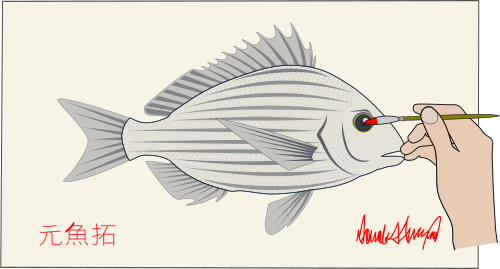
Let the print dry (usually 5–10 minutes).
Using the small detail brush, paint the eye with sumi ink or any color you want. Bright red? Gold? Neon green? No one can stop you.
Sign your print and frame it if you’d like — adding the eye and signature completes the gyotaku tradition and officially makes this your fish.
Sign your print and frame it if you’d like — adding the eye and signature completes the gyotaku tradition and officially makes this your fish.
Thank You!
Thank you for purchasing our gyotaku kit — you’re amazing for supporting our small craft business.
If you’d like to be featured on our gallery page, send us a photo of your finished print. We’d love to show off your fishy masterpiece!
Email: [email protected]