
A Brief History of Gyotaku
From Edo Fishermen to Modern Art
Gyotaku originated in the mid-1800s during the late Edo period in Japan, when fishermen inked their freshly caught fish with traditional sumi ink and pressed them onto rice paper (washi) to create precise, life-size impressions.
These prints served multiple practical purposes: documenting the exact size, shape, and species of the catch for bragging rights or settling competitions (it’s said samurai even used them to decide fishing bets!), and taking the prints ashore to show customers at markets or shops exactly what fresh fish were available for sale—no photos, scales, or storytelling required.
Often, the prints included handwritten or stamped details like the date, location, fisherman’s name, witness, and tackle used. The oldest surviving examples date to 1839 (with collections preserved in places like the Tsuruoka City Library), marking the start of a tradition that blended utility, proof, and artistry. Over time, gyotaku evolved from a fisherman’s tool into a respected art form, still practiced today for its stunning detail and cultural heritage.
Sumi Seaprints is passionate about sharing the timeless Japanese art of gyotaku with kids, anglers, families, and anyone fascinated by this unique way to capture the beauty and excitement of the catch.
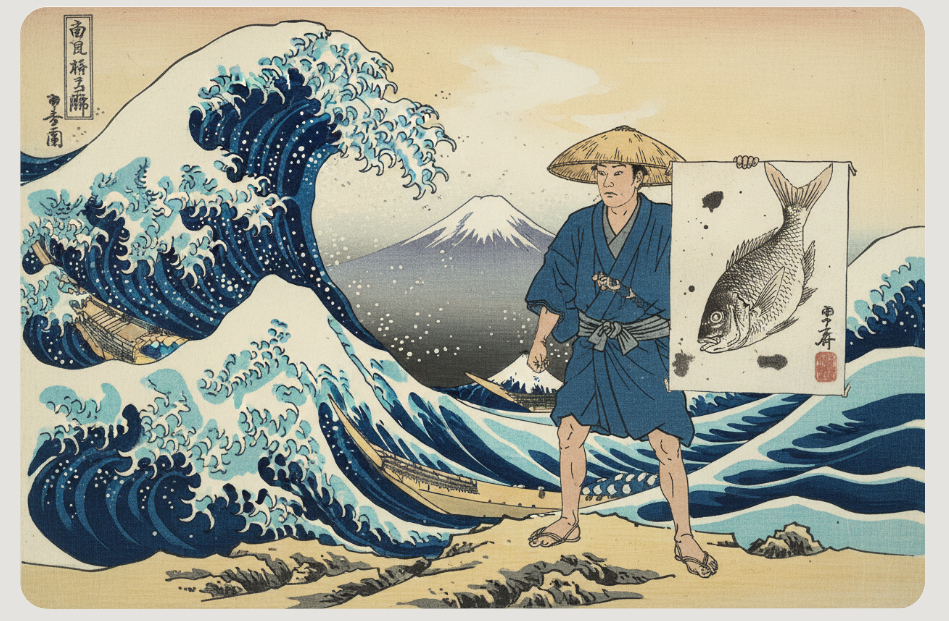

Actual customer testimonial photo, 1804.
“Five stars. Would rub paper on fish again.” -Urashima Tarō (probably)
Have a question or just want to show off your prints? Drop us a message — we answer every single one.
Email: [email protected]